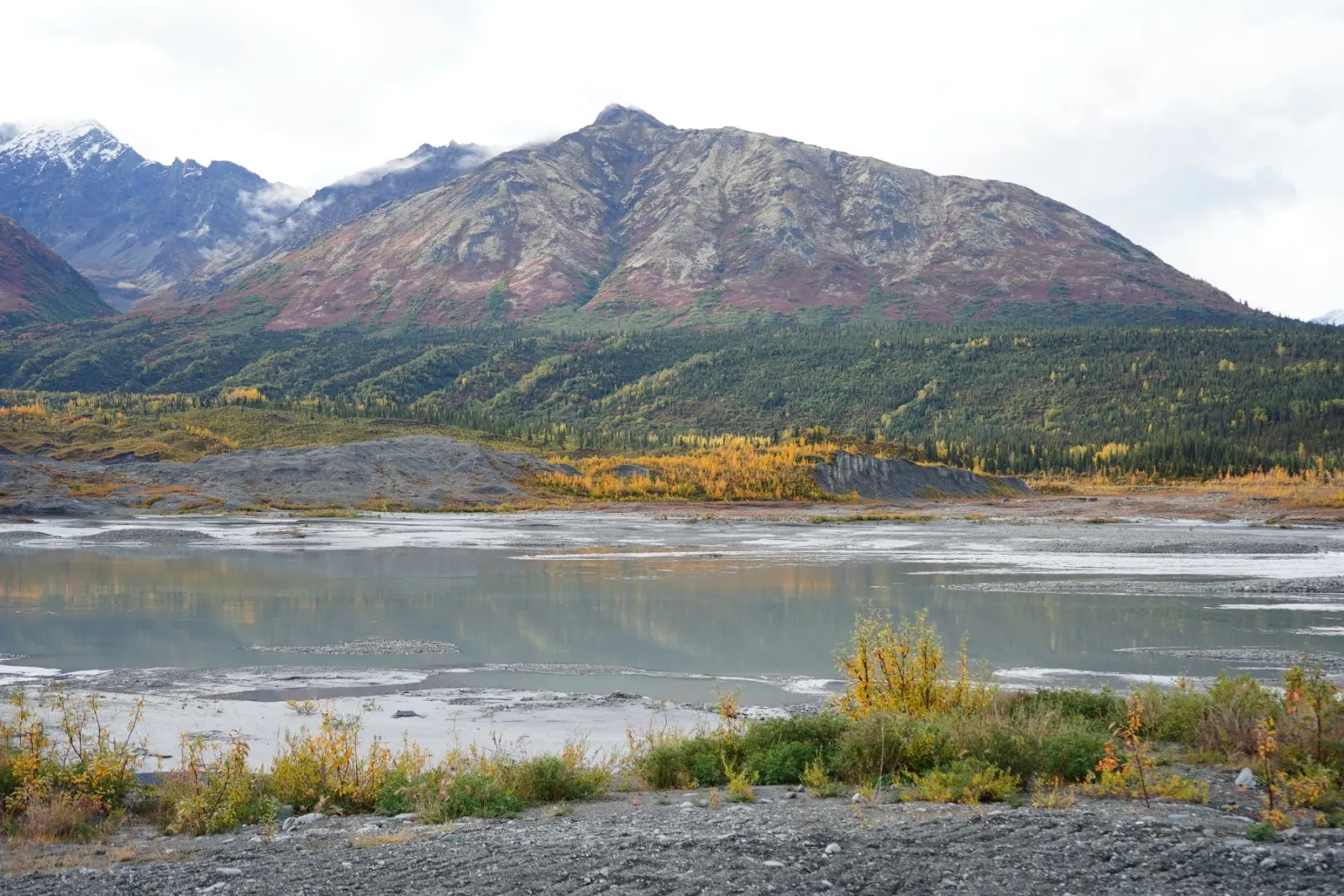
Gold is Alaska’s official state mineral, and it shaped the state’s history from Juneau to Nome and Fairbanks. Today, visitors and residents can still pan its creeks, but land in Alaska is a patchwork of state, federal, Native corporation and private ownership, crossed by thousands of active mining claims. Here is where you can pan for gold in Alaska, the rules that apply, and the gold rush history behind the most famous districts.
In brief
- The easiest legal starting points are designated recreational mining areas, such as Caribou Creek and Petersville on state land, and the gold panning creeks of the Chugach National Forest near Hope.
- With a pan and a hand shovel, no permit is usually needed in these areas; suction dredges and water pumps need permits from the Alaska Department of Fish and Game, and often the Department of Environmental Conservation.
- Motorized equipment is generally limited to a May 15 to July 15 window to protect salmon habitat.
- Claims, Native corporation land and national parks are off limits without permission; national parks are closed to prospecting.
A short history of Alaska gold
Alaska’s gold story began in the Southeast. In 1880, Joe Juneau and Richard Harris, guided to Gold Creek by the Tlingit leader Kowee, found gold where the city of Juneau now stands. Large hard-rock mines followed, including the Treadwell complex on Douglas Island and later the Alaska-Juneau mine.
In the Interior, prospectors worked the Fortymile country from 1886 and Birch Creek, near Circle, from 1893. When gold was found in the Yukon in 1896, tens of thousands of stampeders passed through the Alaskan ports of Skagway and Dyea on their way to Dawson City; that story is told in our guide to the Klondike Gold Rush.
Then came Nome. In 1898, three prospectors later nicknamed the “Three Lucky Swedes” struck gold on Anvil Creek, and the following year gold was discovered in the beach sands themselves. Within a year, Nome had grown into a tent city of many thousands. In 1902, Felix Pedro’s discovery north of the Tanana River led to the founding of Fairbanks, which remains a gold-mining center today.
Where to pan for gold in Alaska
| Area | Land manager | What is allowed (summary) |
|---|---|---|
| Caribou Creek Recreational Mining Area, Glenn Highway mile 104 | State (DNR) | Pan and hand shovel year-round; detectors, small sluices, rocker boxes and permitted dredges May 15 to July 15 |
| Petersville Recreational Mining Area, Peters Creek | State (DNR) | Hand tools without permit; dredges and pumps with permits, May 15 to July 15 |
| Resurrection, Sixmile and Bertha creeks, Crescent Creek | Chugach National Forest (Crescent Creek on state land) | Pans and sluices; permitted small dredges in season |
| Nome Creek Valley, White Mountains | BLM | Recreational panning in a designated area with hand tools |
| Commercial pay-to-pan sites | Private | Guided panning around Fairbanks, Girdwood, Chicken and other towns |
State recreational mining areas
The Alaska Department of Natural Resources (DNR) has set aside areas where no new mining claims may be staked, so the public can mine recreationally. Caribou Creek, beside the Lion’s Head rock formation on the Glenn Highway, is reached by a steep foot trail down to the creek; mining is limited to the active floodplain and ATVs are prohibited. Petersville, on Peters Creek southwest of Denali State Park, is reached by the Petersville Road from Trapper Creek; the last stretch is primitive and a high-clearance vehicle is recommended. There are no facilities, and claims lie just outside the boundaries, so stay on the Peters Creek valley floor.
The Kenai Peninsula and Hope
Gold was found on Resurrection Creek around 1888, and the small town of Hope on Turnagain Arm grew up as a supply center for the miners. Today, the Chugach National Forest designates recreational panning stretches on Resurrection Creek, Sixmile Creek and Bertha Creek, plus Crescent Creek on state land. Work only the active stream channel or bare gravel bars, do not dig into banks, and respect the active claims that border several of these stretches. The Forest Service and BLM publish a free guide with maps of each area.
Nome and the Seward Peninsula
Nome’s beaches have long been associated with recreational gold mining, and the town still attracts beach miners every summer. Land status around Nome is complex, however: much of the shore is claimed or bordered by private and Native corporation land, and access to parts of East Beach has been the subject of a legal dispute in 2026. Check the current situation with the city, the DNR and local landowners before you dig.
Fairbanks and the Interior
Around Fairbanks, most productive ground is claimed or privately owned. For a first try, visitors usually choose a commercial gold camp or a historic dredge site that offers guided panning, or head to BLM’s Nome Creek Valley in the White Mountains National Recreation Area, north of the city. The Fortymile country near Chicken combines history, public land and many private claims; check maps carefully.
The rules
Know who owns the ground
- State land: managed by the DNR, which also records state mining claims. Outside recreational areas, check claim maps before you pan.
- Federal land: BLM and Forest Service land may be open to casual use where it is not withdrawn or claimed; federal claims are listed in BLM records.
- Alaska Native corporation land: private land under the 1971 Alaska Native Claims Settlement Act. You need the corporation’s permission.
- National parks and preserves, such as Denali, Wrangell-St. Elias and Klondike Gold Rush National Historical Park: prospecting is prohibited.
Panning on someone else’s claim without consent is claim-jumping, even if the ground looks abandoned. Our guide to gold prospecting in the United States explains how land status and claims work across the country.
Equipment and permits
A gold pan and a hand shovel are accepted in all the recreational areas above. Once you add a pump, a power sluice or a suction dredge, you generally need a free Fish Habitat Permit from the Alaska Department of Fish and Game and, for dredging, a general permit from the Department of Environmental Conservation. Dredge size and engine power are capped, and the season is short. Sluices and rocker boxes must be set back so that muddy water does not run straight into the creek. See our guides to the sluice box and to metal detecting for gold.
Safety in the field
- Glacial creeks are cold and can rise quickly after rain or on warm afternoons; wear waders and avoid fast water.
- You are in bear country: make noise, carry bear spray and store food properly.
- Many sites have no phone coverage or facilities: tell someone your plans and carry what you need.
What to expect in the pan
Recreational panners in Alaska mostly find fine flakes and small pickers, concentrated with black sand on or near bedrock, the layer miners call paydirt. Nuggets do occur, especially where detectors are allowed, but they are rare finds. Like all native gold, Alaskan gold is naturally alloyed with silver, and its color and fineness vary from district to district. Before you celebrate, make sure what glitters is not mica or fool’s gold.
Start by mastering the technique described in our guide on how to pan for gold, with the basics listed in our gold panning kit guide. If you plan to continue across the border, read our page on gold panning in Canada, which covers the Yukon.
To see what a solid natural nugget looks like next to your flakes, discover the collection: each one-of-a-kind piece is photographed, weighed and sold with its certificate of authenticity.
Rules change and vary by site. This guide is general information, not legal advice: always confirm current regulations with the DNR, the land manager and the Alaska Department of Fish and Game before you go.
Frequently asked questions
Do I need a permit to pan for gold in Alaska?
Not for a pan and a hand shovel in the designated recreational areas. Suction dredges, pumps and power sluices need permits, and claims, private land and closures always apply.
When is the best time to pan for gold in Alaska?
Summer, from late May to early September, when creeks are free of ice. Motorized equipment is usually restricted to May 15 to July 15 to protect salmon.
Can I keep the gold I find?
In recreational areas, small finds made within the rules are generally kept by the finder. On a claim or private land, the gold belongs to the claim holder or owner unless agreed otherwise.
Where can tourists try gold panning in Alaska?
Commercial gold camps near Fairbanks, Girdwood and Chicken offer guided panning with gold-bearing gravel. For free public panning, Caribou Creek and the Hope area creeks are the most accessible from Anchorage.
Sources
- Alaska Department of Natural Resources, Caribou Creek and Petersville recreational mining area fact sheets.
- USDA Forest Service and BLM, Gold Panning: a guide to recreational gold panning on the Kenai Peninsula, Chugach National Forest.
- Alaska Department of Fish and Game, Division of Habitat, fish habitat permits for mining.
- Alaska Public Media, reporting on the Nome East Beach access dispute (August 2026).