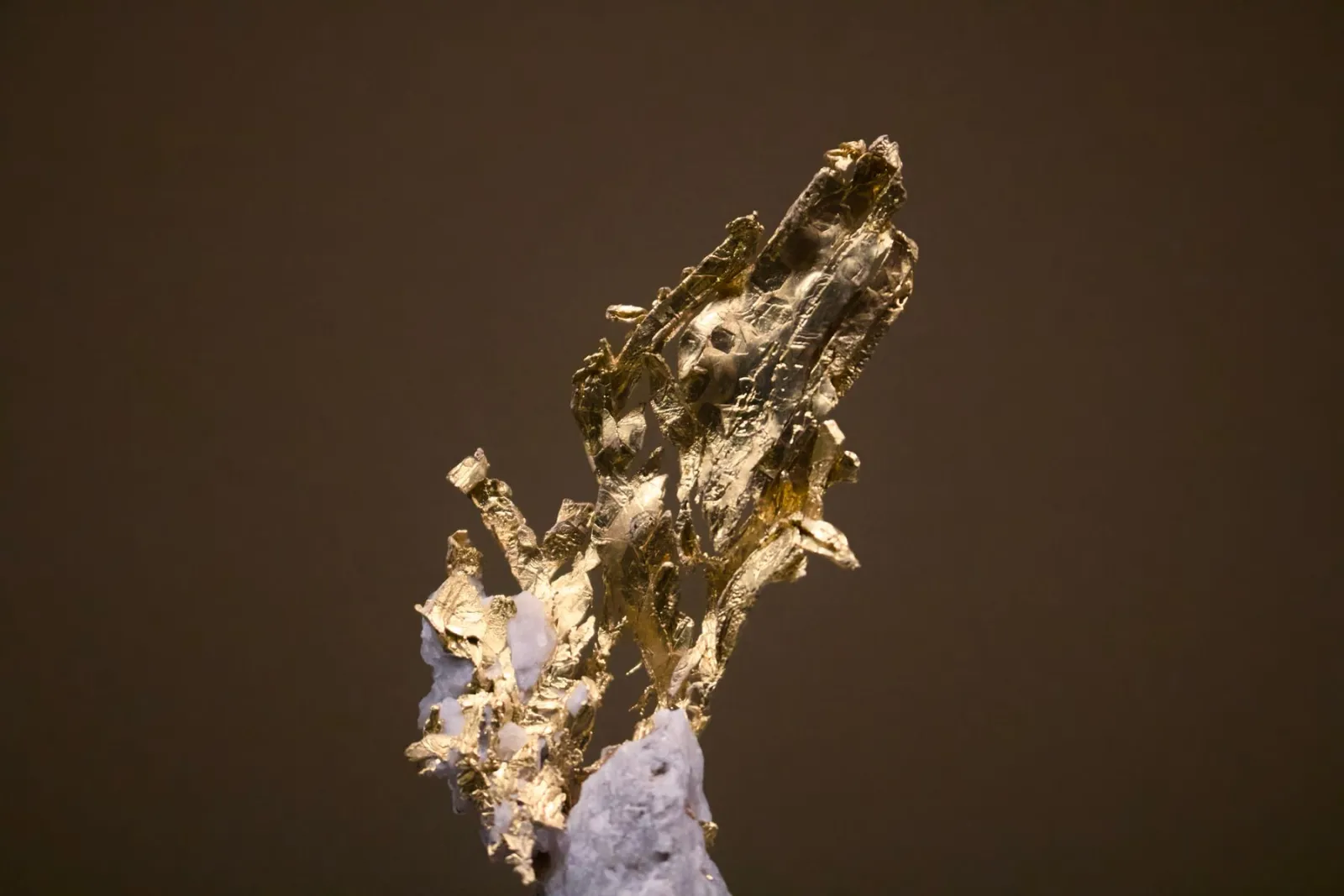
Many first-time buyers expect a gold nugget to be “24 karat”. It never is. Native gold is a natural alloy, formed deep in the earth long before anyone refined it. Understanding what a nugget really contains helps you read a listing correctly and judge its price.
What a natural nugget is made of
Gold crystallises from hot fluids moving through cracks in the rock. Those fluids also carry silver, which bonds easily with gold. Every nugget therefore contains some silver, plus traces of copper, iron or other metals. The rest of the specimen may include quartz or iron oxides trapped during formation.
Most Australian nuggets fall roughly between 85% and 95% gold, with silver making up most of the remainder. Purity varies from one goldfield to another, and sometimes from one nugget to the next in the same gully.
Fineness and karats: how to convert
Geologists and refiners express purity as fineness, in parts per thousand. Jewellers use karats, out of 24. The conversion is simple: karats = fineness × 24 ÷ 1000.
| Fineness | Gold content | Approx. karats |
|---|---|---|
| 999 | 99.9% (refined bullion) | 24 k |
| 950 | 95% | 22.8 k |
| 900 | 90% | 21.6 k |
| 850 | 85% | 20.4 k |
| 750 | 75% (18 k jewellery) | 18 k |
A typical nugget is therefore purer than 18 k jewellery, but less pure than a refined bar. When gold contains more than about 20% silver, it is called electrum and takes on a paler, greenish-yellow colour.
Why the surface can be purer than the core
Once a nugget is freed from its rock and travels through soil and streams, groundwater slowly leaches silver from its outer layer. The result is a thin rim that is richer in gold than the interior. This is one reason alluvial nuggets often show a deep, warm yellow, and why a surface reading does not always represent the whole piece.
How purity is measured
- X-ray fluorescence (XRF): fast and non-destructive, but it reads only the surface, so the gold-rich rim can push the figure up.
- Specific gravity: comparing weight in air and in water gives density. Pure gold is about 19.3 g/cm³ and quartz about 2.65 g/cm³, so the method estimates the gold content of a specimen without damaging it.
- Fire assay: the reference method used by refiners. It is precise but destroys the sample, which makes no sense for a collectable nugget.
To check that a nugget is genuine in the first place, see our guide on how to tell a real gold nugget.
Does purity change the value of a nugget?
Purity sets the melt value: the amount of fine gold you would get by refining it. But a natural nugget is valued above that figure. Its shape, size, character, origin and rarity all add a premium, because each nugget is unique and finds of quality pieces are increasingly rare. Two nuggets of the same weight and purity can have very different prices.
We explain this in detail in how gold nugget prices are calculated. If you want to know where our pieces come from, read about Australian gold.
What to look for when you buy
- A clear statement that the nugget is natural and unrefined, not cast or melted.
- An accurate weight in grams, ideally with photos on a scale.
- The origin, as precisely as the seller can give it.
- For specimens with quartz, an honest indication of how much of the weight is gold.
- A certificate of authenticity from the seller.
A natural nugget is not meant to be pure. Its silver content, its colour and its rim are part of the story of how it formed. Browse the collection to see how much that story varies from one nugget to the next.